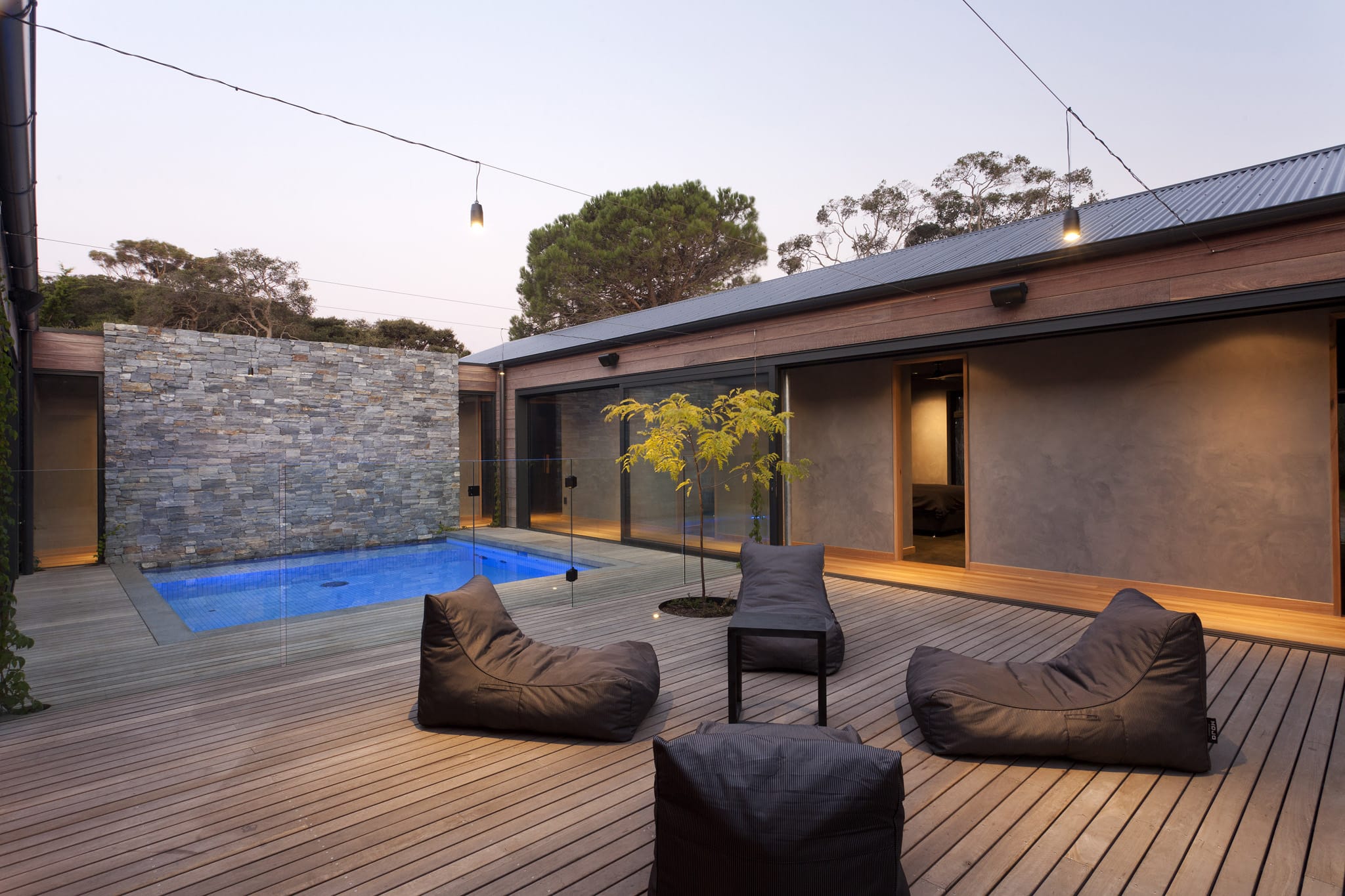
A good deck gives you somewhere to enjoy the sun, have friends around and make better use of your outdoor space. The material you choose plays a big part in how it looks and how much upkeep it needs.
Some homeowners want the warmth and character of natural hardwood. Others prefer a lighter finish, a more affordable option or less ongoing maintenance.
If you’re planning a deck in Christchurch or North Canterbury, here’s a guide to ten decking options worth considering.
Kwila Decking
Kwila is a familiar choice for New Zealand decks, with warm reddish-brown tones that bring plenty of character to an outdoor area. It is a naturally durable hardwood and suits both traditional homes and modern renovations.
Left exposed to the weather, Kwila gradually turns silver-grey. Maintaining its richer colour means cleaning and recoating it with a suitable decking oil.
One thing to plan for is tannin bleeding when the boards are new. Rain can wash these natural compounds out of the timber, potentially staining paving or other surfaces below. This needs consideration when choosing where and how to use it.
FJ Kwila Decking
Finger-jointed Kwila offers the same warm colour and natural durability as solid Kwila, but the boards are made by joining shorter pieces of timber into longer lengths.
These longer, consistent lengths can help reduce waste and the number of end joins across a deck, depending on its layout. The finger joints remain part of the board’s appearance, so it is worth looking at a sample before deciding.
Like solid Kwila, it can release tannins when first installed and will weather to grey unless its colour is maintained with a suitable coating.
Purple Heart Decking
Purple Heart is a dense South American hardwood with a distinctive colour and excellent natural durability. It is worth considering when you want a premium timber deck with a little more character.
Despite its name, the purple colour does not stay unchanged. With exposure, the timber moves towards brown and eventually silver-grey if left to weather.
Its density makes careful installation important, and a suitable penetrating oil is recommended during the initial weathering period. Choose it for its strength and changing natural appearance, rather than expecting a permanently purple deck.
Vitex Hardwood Decking
Vitex is a lighter-coloured hardwood from the Solomon Islands. Its softer natural tones make it an appealing option for homeowners who want a lighter outdoor space.
It weathers towards silver-grey and offers a different look from the deeper reds and browns of Kwila. It can work particularly well where the aim is a relaxed, natural finish.
Vitex still needs regular cleaning, and surface mould can develop in some conditions. Good airflow beneath the deck and following the supplier’s coating recommendations help keep it looking its best.
Garapa Decking
Garapa is a South American hardwood recognised for its golden, honey-coloured appearance. It offers a warm finish without the deeper red tones associated with Kwila.
Dense and naturally durable, Garapa is another option for homeowners wanting a hardwood deck. Its colour will gradually soften to silver-grey when exposed to the weather.
Preparation matters with this timber. Supplier guidance recommends coating all sides before installation to help it season, particularly on decks close to the ground. An ongoing coating programme is needed if you want to retain its golden colour.
Thermory Ash Decking
Thermory Ash is real timber that has been thermally modified using heat and steam. This process improves its durability and stability while giving it a rich brown colour.
Its visible ash grain makes it an attractive option for a deck where the timber itself is a feature.
You can allow it to weather naturally to silver-grey or use a suitable UV-resistant oil to help maintain the darker tone. Thermal modification reduces maintenance demands in some respects, but the deck still needs cleaning and care. Thermory recommends regular oiling when retaining the original colour is the goal.
Treated Pine Decking
Treated pine is a practical option when keeping the initial cost down is a priority. It offers a natural timber finish and can suit everything from a small outdoor sitting area to a larger family deck.
Pine is a softwood, with a different grain and character from tropical hardwoods. It can be finished with a suitable decking stain or coating to complement the house.
The treatment, timber grade and board profile should be selected for the application. As with any timber deck, proper ventilation and installation are important parts of getting a lasting result.
NatureDeck Decking
NatureDeck is a treated pine decking product that uses an alternative preservative treatment without arsenic or chromium. It is still treated timber, so it should not be described as chemical-free.
It provides another option for homeowners who like the appearance of pine but have a preference about the treatment used.
Like other timber decking, it needs suitable fixings, correct installation and ongoing care. Your choice of finish will also influence its appearance as it weathers.
ModWood WPC Decking
ModWood is a wood-plastic composite decking product made using wood fibre and recycled plastic. It offers an alternative to natural timber for homeowners wanting less ongoing coating work.
It does not need the regular oiling associated with maintaining the colour of many timber decks. However, it still needs sweeping and periodic cleaning, and mould can develop where conditions allow.
Colour choice is worth thinking about on sunny sites. Darker boards can become hot underfoot, so consider how the deck will be used and how much shade it will receive. Fixing requirements and clearances also vary between product ranges.
Carbonised Bamboo Decking
Carbonised bamboo is an engineered decking material made from processed and compressed bamboo. Its dense construction and rich brown appearance offer another alternative to traditional timber boards.
The finished product has a more consistent appearance than many natural timbers, although its colour will still change with exposure.
Performance and maintenance depend on the particular product, so it is important to check the manufacturer’s installation, coating and warranty requirements. Factory coating gives the boards their initial finish, but does not remove the need for ongoing care.
How Do You Choose?
Start with the appearance you want, then think about the maintenance you are comfortable doing. A freshly oiled hardwood deck and a naturally weathered grey deck can both look great, but they need different approaches to care.
Compare physical samples where possible and ask how each material will change outdoors. The full installed cost matters too, including framing, fixings, coatings, steps and any built-in seating.
The boards are only one part of a successful deck. A well-planned layout, sound framing, drainage and ventilation all contribute to how it performs over time.
Planning a New Deck?
Carmont Builders builds decks and outdoor living spaces across Christchurch and North Canterbury. Whether you’re replacing an old deck or creating somewhere new to relax, we can help you work through the layout, materials and details that suit your home.
Get in touch to discuss your project at carmont.co.nz.
Product Information Sources
Product details checked October 2026. Refer to the selected product’s current installation and maintenance instructions.
- Kwila – product information
- FJ Kwila – product information
- Purple Heart – product information
- Vitex – product information
- Garapa – product information
- Thermory Ash – product information
- Treated Pine – product information
- NatureDeck – product information
- ModWood – product information
- Carbonised Bamboo – product information